
Technical guide
How IPv4 Leasing Works and Why It Keeps Networks Operational
See how IPv4 leasing helps your network launch, grow and keep customers connected, with current pricing, direct supply and LARUS Continuity.
Choose IPv4 ContinuityYour next customer needs a working connection, not a long address purchase. IPv4 leasing gives your network room to grow while keeping capital available for servers, connectivity and new services. With LARUS, Unlimited IPv4 and Continuity bring direct supply and continued use into the same buying decision.
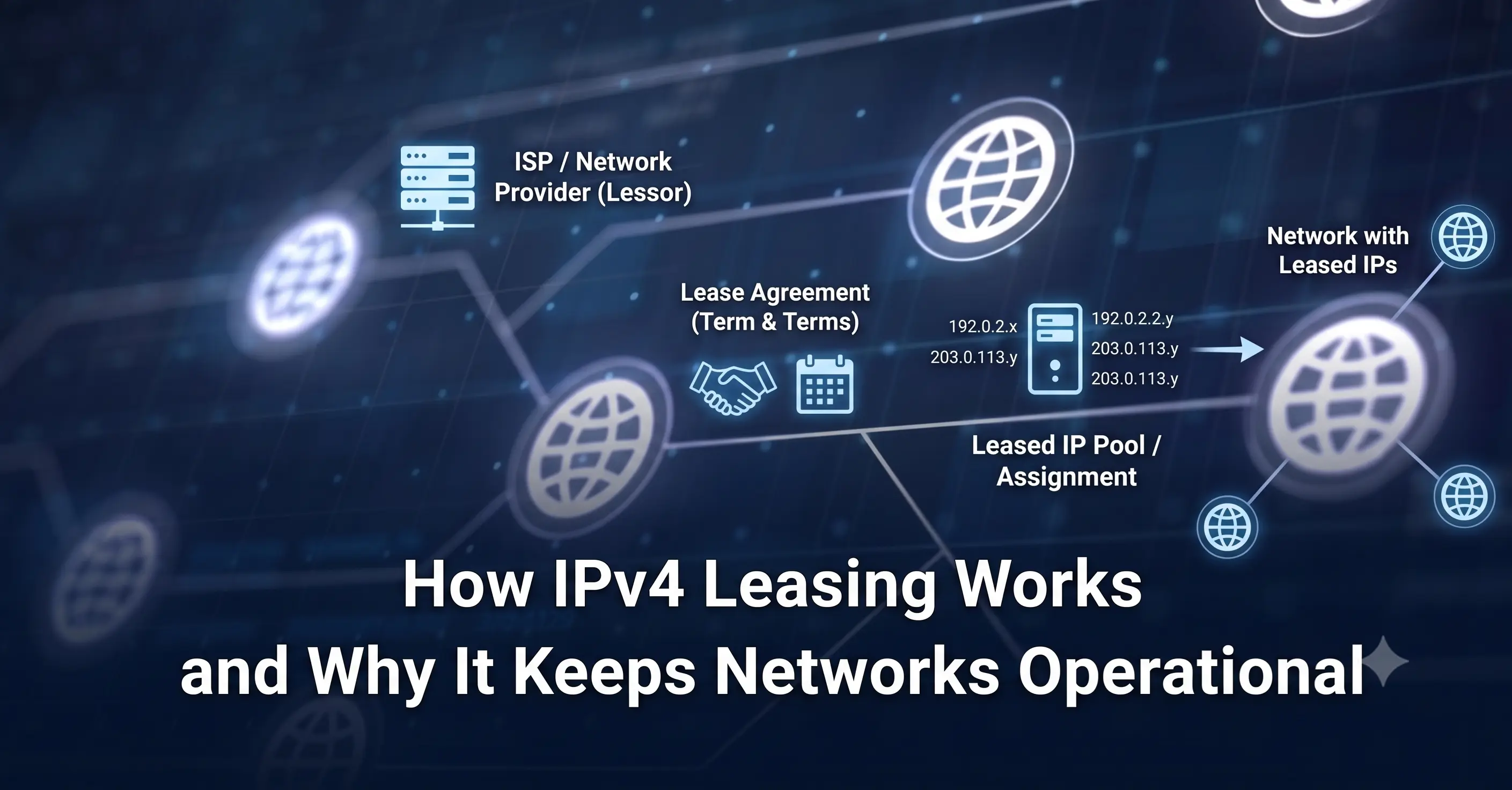
How IPv4 Leasing Works: From Capacity to Customer Traffic
You rent a block of public IPv4 addresses and put it to work on your network. Start with the services you want to launch, then choose the capacity, lease period and Continuity plan that fit your growth.
- Size your next deployment. Tell LARUS where you are expanding and how many addresses your customers need. A /24 contains 256 addresses; a /22 contains 1,024.
- Choose the current offer. Compare capacity and duration in the IPv4 pricing calculator, keeping acquisition capital in your business.
- Connect the block. Coordinate your origin ASN, upstream connection and routing authorisation so your customers can reach the services you launch.
- Grow with the same supply partner. Bring expansion, support and renewal to the team behind your addresses.
A Letter of Authorisation (LOA) establishes permission to announce a block. A Route Origin Authorisation (ROA) identifies the origin ASN and prefix length for RPKI validation. Aligning these with IRR records and your upstream helps your route travel as intended.
Keep the Connections Your Customers Already Trust
Your IPv4 addresses quickly become part of other people's systems: API allowlists, DNS records, VPNs, email and firewall rules. Changing them can mean asking customers and partners to change their own configurations. Plan continued use from the start, so growth brings new business instead of avoidable migration work.
Make the Addresses Work for Your Applications
Successful activation means customers can use your service. Focus on the details that affect their experience:
- Reachability: validate BGP announcements and routing records with your upstream before moving traffic.
- Reputation: check the block against the applications, email systems and relevant blocklists your customers depend on.
- Reverse DNS: give services a recognisable hostname where their checks rely on rDNS.
- Location: check geolocation results used by your services and coordinate updates when a database has an old record.
- Support: keep a direct route to the team handling address issues and abuse reports, so your engineers can resolve problems sooner.
Work Directly with the Team Behind Your IPv4
LARUS supplies addresses from its own pool. You can discuss a routing change, the next expansion or a renewal with the operating partner responsible for your supply. Fewer handoffs give your team a clearer path from a customer problem to the people who can act.
Choose Continuity Before Your Network Depends on It
Buying a block does not remove its dependence on the regional registry. A broker introduction does not by itself take responsibility for that relationship either. LARUS Continuity places the registry-facing work with a specialist supplier, so your operating team can focus on the services customers buy from you.
Put LARUS's Institutional Strength Behind Your Network
The foundation includes Cloud Innovation's court-recognised shareholder position in AFRINIC and its exclusive mandate appointing LARUS. That gives you a concrete reason to look beyond a list of available addresses when choosing who supports their continued use.
Expand IPv4 While Building Your IPv6 Future
ISPs can add subscriber capacity; hosting and cloud platforms can open new customer environments; enterprise and CDN teams can support public endpoints. Lease around the services and locations that need IPv4 while continuing your IPv6 rollout. Dual-stack planning lets you reach customers in both environments.
Turn Your Next Deployment into Revenue
Bring your address count, location and routing goals to LARUS. Choose IPv4 Continuity and keep supply, activation and growth connected to the business you are building. The leasing benefits guide helps you compare that choice with acquiring a block.
IPv4 Leasing Questions
Can I use rented IPv4 addresses with my own ASN?
Yes. Coordinate the origin ASN and upstream routing with LARUS so the authorisation and routing records support your announcement. See the IPv4 leasing guide for the deployment journey.
Does leasing make sense for long-running services?
Yes. Plan renewal and growth alongside the first deployment. LARUS Continuity is built around continued use, so your decision supports the network your customers will depend on after launch.
How much does IPv4 leasing cost?
Use the current offer for your chosen block size, period and plan. Compare the total rental budget with acquisition costs and the support behind the addresses, using the same capacity and planning horizon.
What should I check before moving customer traffic?
Check reachability, the applications your customers use, reputation, rDNS and location data. These checks help turn an allocated block into a service your customers can actually use.
Keep your customers connected
Build the capacity for your next launch.
Choose Unlimited IPv4 with LARUS Continuity and plan supply, routing and growth with one direct partner.